From Rookie to Expert: EMA#85 Ends a Championship-Winning Season at Ottobiano
No chequered flag at the final round, but a season that tells a much bigger story: an early championship title, a rebuilt MiniGP 2 and a remarkable rise through three racing categories.
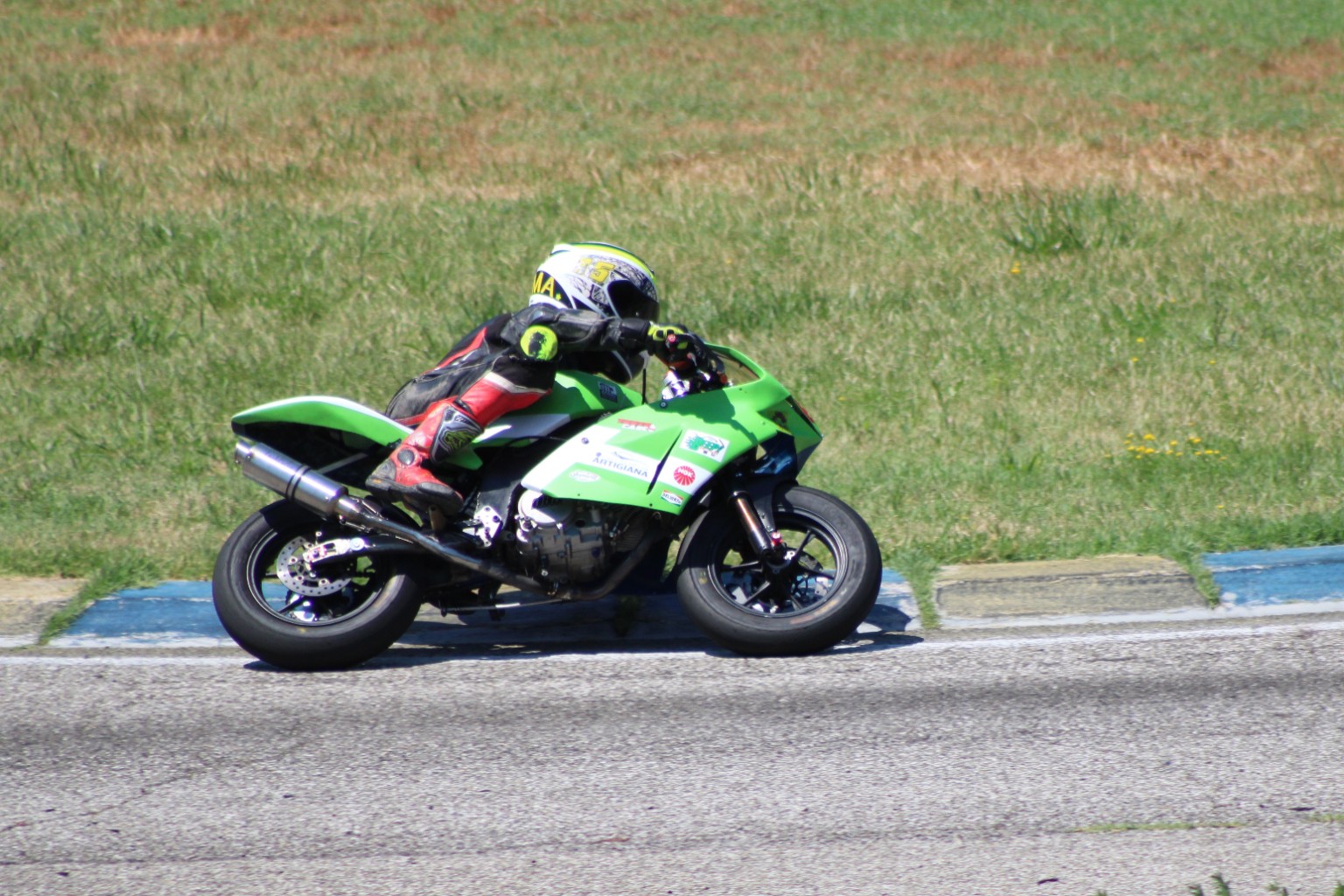
EMA#85 arrived at the GP6 della Padania in Ottobiano on 3–4 October with a very different objective from the usual race weekend.
The interregional championship had already been mathematically secured. Ottobiano was therefore chosen primarily as an opportunity to complete the testing programme on Emanuele's MiniGP 2 following the extensive rebuilding work carried out after the accident at Viverone.
It was a deliberate decision: use the final championship weekend as a genuine test bench, without the pressure of the standings, while verifying on track the technical changes introduced during the reconstruction.
What happened over the weekend, however, turned Ottobiano into something more than a test.
It became the final chapter of a season in which Emanuele started as a Rookie, was promoted to Talent at the very first GP and ended the year racing alongside the Expert riders.
Saturday: observing before attacking
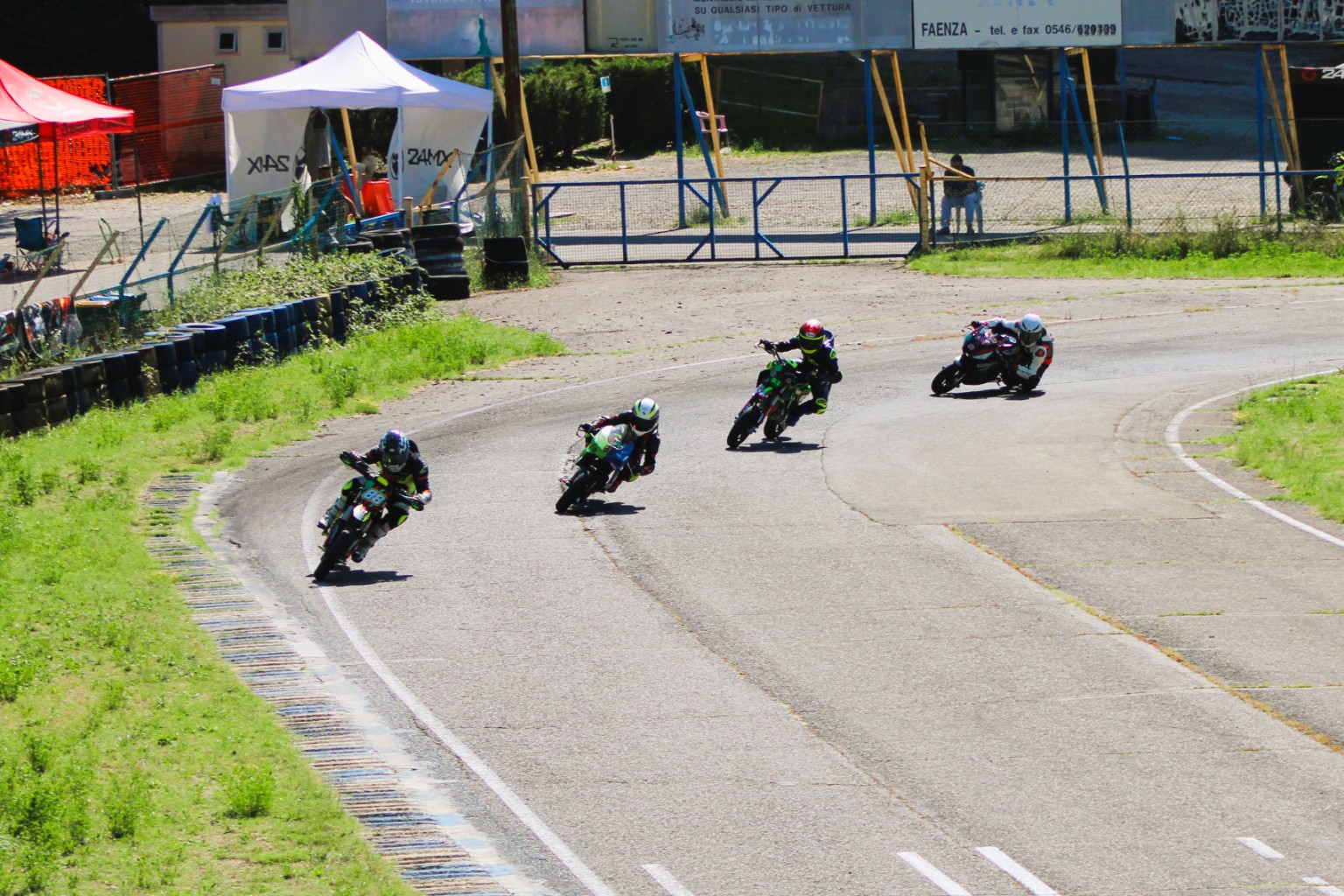
Saturday's free practice immediately introduced a new element to the weekend.
Following the lap times recorded on track, Race Direction reorganised part of the groups, moving some MotoLive Show riders from Talent into the Expert category.
For EMA#85 this meant facing riders whose strategies, riding styles and behaviour on track were largely unfamiliar.
Free practice therefore became an opportunity to study as well as test. Emanuele and the team observed how the new competitors approached the more technical sections, their corner-entry and exit lines and the areas where Emanuele could use his riding style to compensate for the technical differences between the bikes.
Those differences are particularly significant at Ottobiano. Emanuele's MiniGP 2 uses a 160 engine producing around 15 hp, while the Expert field also includes larger configurations, including 190 Daytona engines capable of approximately 22–25 hp.
On the circuit's long, fast sections, the difference in outright performance is inevitable.
With the technical regulations setting clear limits on what can be changed, the strategy was straightforward: gain in the technical sections what would inevitably be lost on the straights.
Q1: second on the timing screen, but the bike says stop
The first qualifying session suggested that the strategy was working. Emanuele was competitive and running in second position when he began to hear an unusual noise.
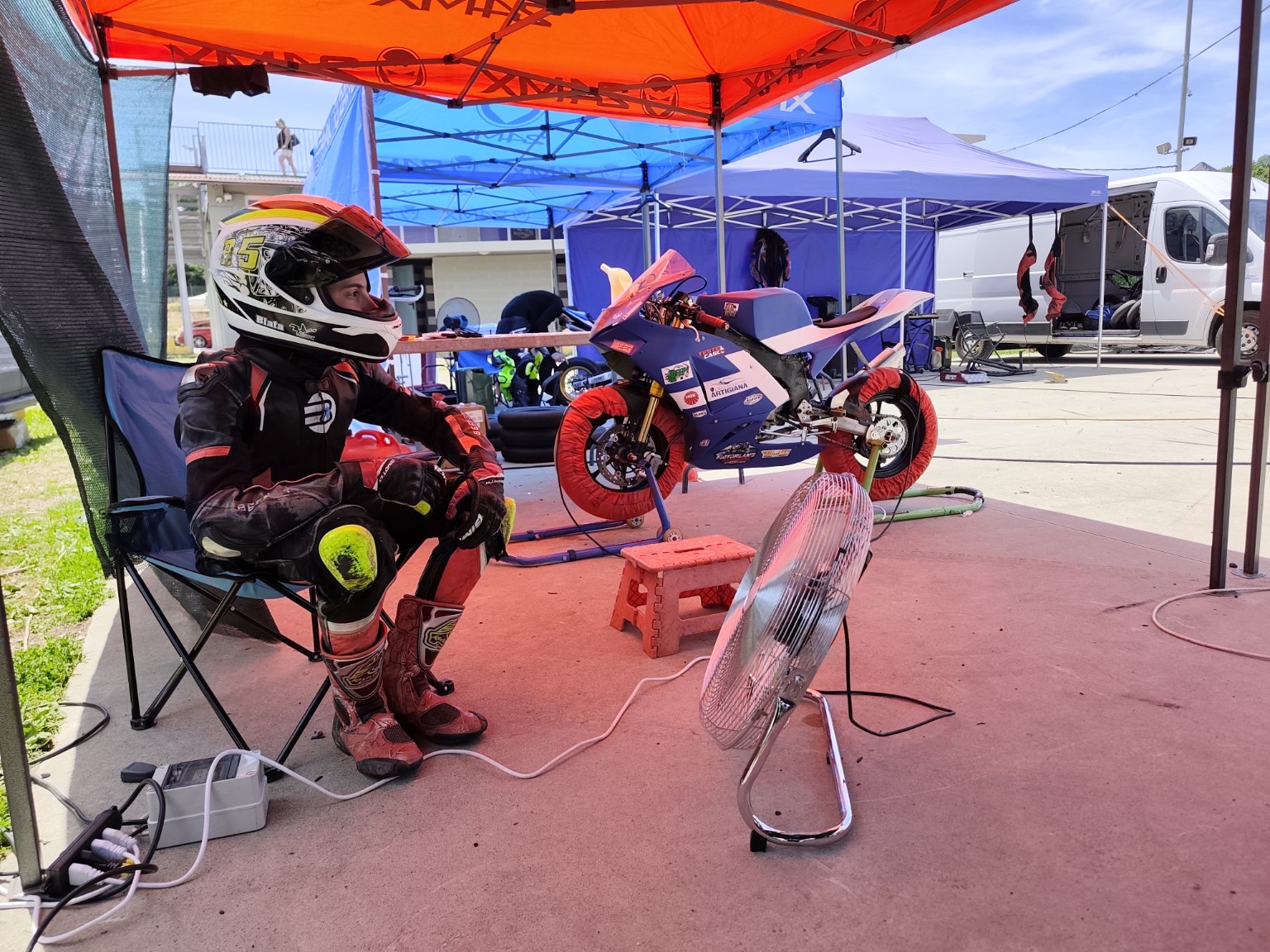
A first pass through the pit lane revealed damage to one of the rubber vibration mounts associated with the exhaust collector mounting. After the initial inspection, Emanuele returned to the circuit.
Within two laps, however, the feeling from the bike changed again.
Emanuele signalled the problem and came back in, this time heading directly to the paddock. The MiniGP 2 was no longer giving him the feedback he needed to continue safely.
Further inspection revealed that a bolt in the engine and pivot mounting area had sheared.
It was an area EMA#85 had already worked on during the season. An earlier problem had led to a first revision of the system; a second solution later produced a different type of failure, and an additional modification had been introduced during the post-Viverone rebuild.
With Q1 lasting only ten minutes, there was no possibility of completing the repair and returning to the track before the session ended.
Between Q1 and Q2, the damaged components were replaced and the mounting was restored while the team carried out a wider inspection of the bike.
Q2: a few metres, then silence
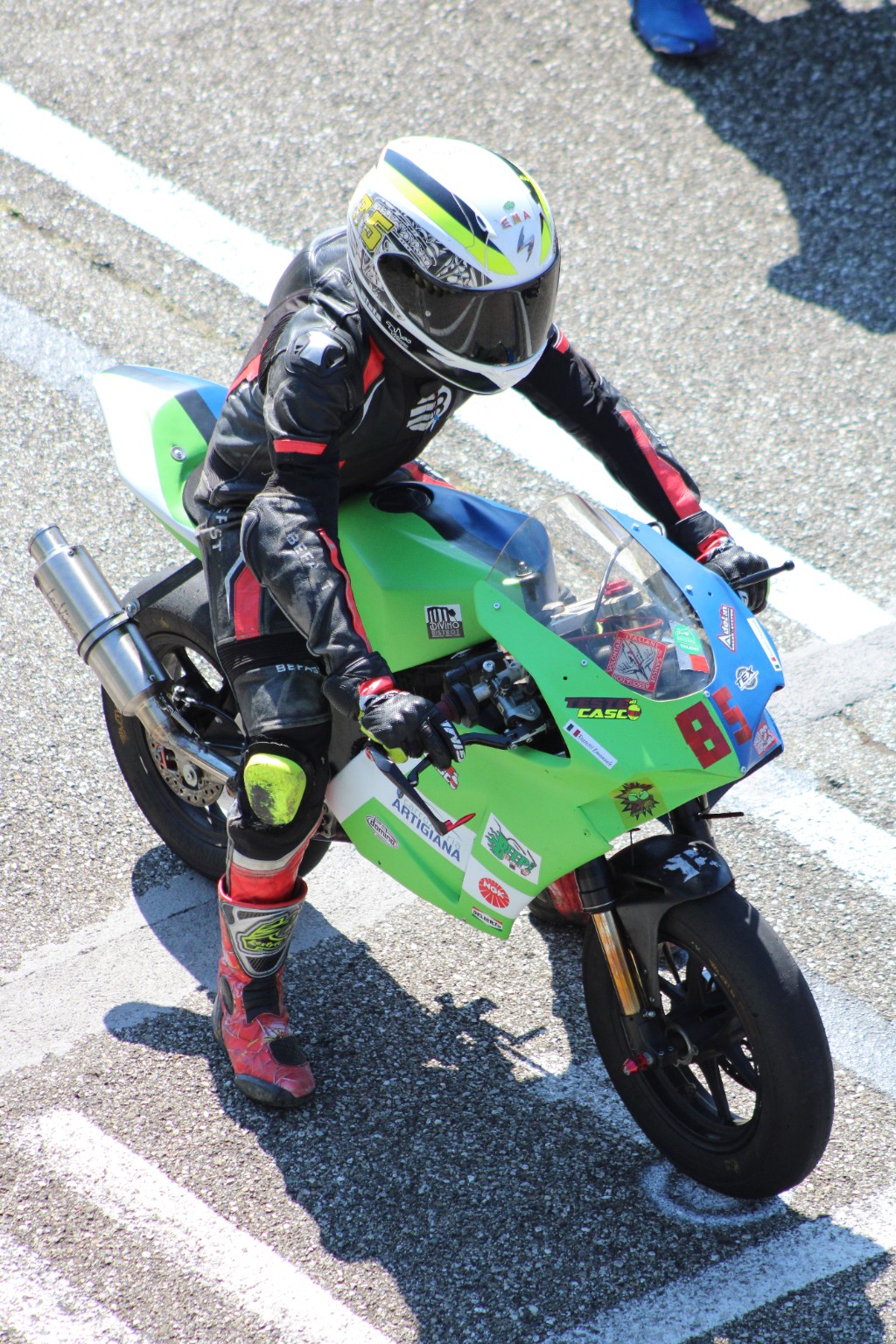
During those checks, a small oil seep was also found on the right-hand front fork stanchion, another component involved in the Viverone accident.
The issue appeared manageable. An absorbent element was fitted around the lower section of the stanchion, while any replacement would be left until the end of the day.
Replacing it immediately would also have meant repeating part of the front-end setup, with insufficient time between the two sessions to verify the new settings properly.
Everything appeared ready for Q2. At least until the bike came off the stands.
When the riders were called to the pit lane, the engine was started while the MiniGP 2 was still on its stands. The tyre warmers were removed. Emanuele climbed onto the bike and it was lowered to the ground.
After only a few metres, an unmistakably unhealthy noise came from the engine. Then it stopped.
The bike was immediately returned to the stands and taken back to the paddock. Emanuele would not even make it onto the circuit for Q2.
The sound suggested an internal engine problem, but no definitive diagnosis had yet been established. A complete inspection would be required before the exact cause could be identified.
After discussing the situation with the team, Emanuele chose not to continue.
Installing a fresh engine without enough time to check its setup and behaviour properly would have meant entering the race without complete confidence in either its performance or reliability.
For EMA#85, that also meant potentially compromising the level of safety required for Emanuele and for the other riders on track.
No race, therefore. And no need to prove anything at any cost.
From the grandstand, another kind of training
Emanuele watched the races from the grandstand — but not simply as a spectator.
From there he could observe several riders at once, compare lines through different parts of the circuit and study competitors who, after his move into the Expert group, could become future rivals.
From the saddle, a rider can usually study the competitor directly ahead or behind. From outside the circuit, the picture becomes much wider.
Even a race that was never started became another opportunity to learn.
From Rookie to Expert in a single season
To understand what Ottobiano really represents, it is worth going back to the opening round of the championship.
At Borgo Ticino, Emanuele began the season entered as a Rookie.
After qualifying, his lap times prompted Race Direction to move him immediately into the Talent category.
A lap that would have put him on Rookie pole was fast enough to place him among the leading Talent riders, giving him third position on the starting grid in his new category.
He raced it as a Talent.
He finished it among the Experts.
Between those two moments came a championship title secured mathematically with rounds still remaining — and achieved despite a season that was far from straightforward.
One Viverone round was missed for family reasons. Another visit to the same circuit ended without a race start following the qualifying accident. Ottobiano ended without a start because of the engine problem.
Three situations that produced no championship points, but which make the advantage built during the races Emanuele actually contested even more significant.
The championship had already been mathematically secured at Rioveggio. The final result therefore needs to be read across the entire season rather than through the last line of the standings alone.
A 2026 season worth more than a trophy
The sporting result matters, but for EMA#85 the real value of the season also lies in the experience gained along the way.
Every weekend added something: adapting to different circuits, learning new opponents, managing races, developing the bike and dealing with the unexpected.
Our thanks also go to all the people and technical partners who, throughout the season, made their time, experience and expertise available whenever support was needed on the MiniGP 2. A valuable contribution, often far from the spotlight, that accompanied EMA#85 throughout the championship.
What comes next?
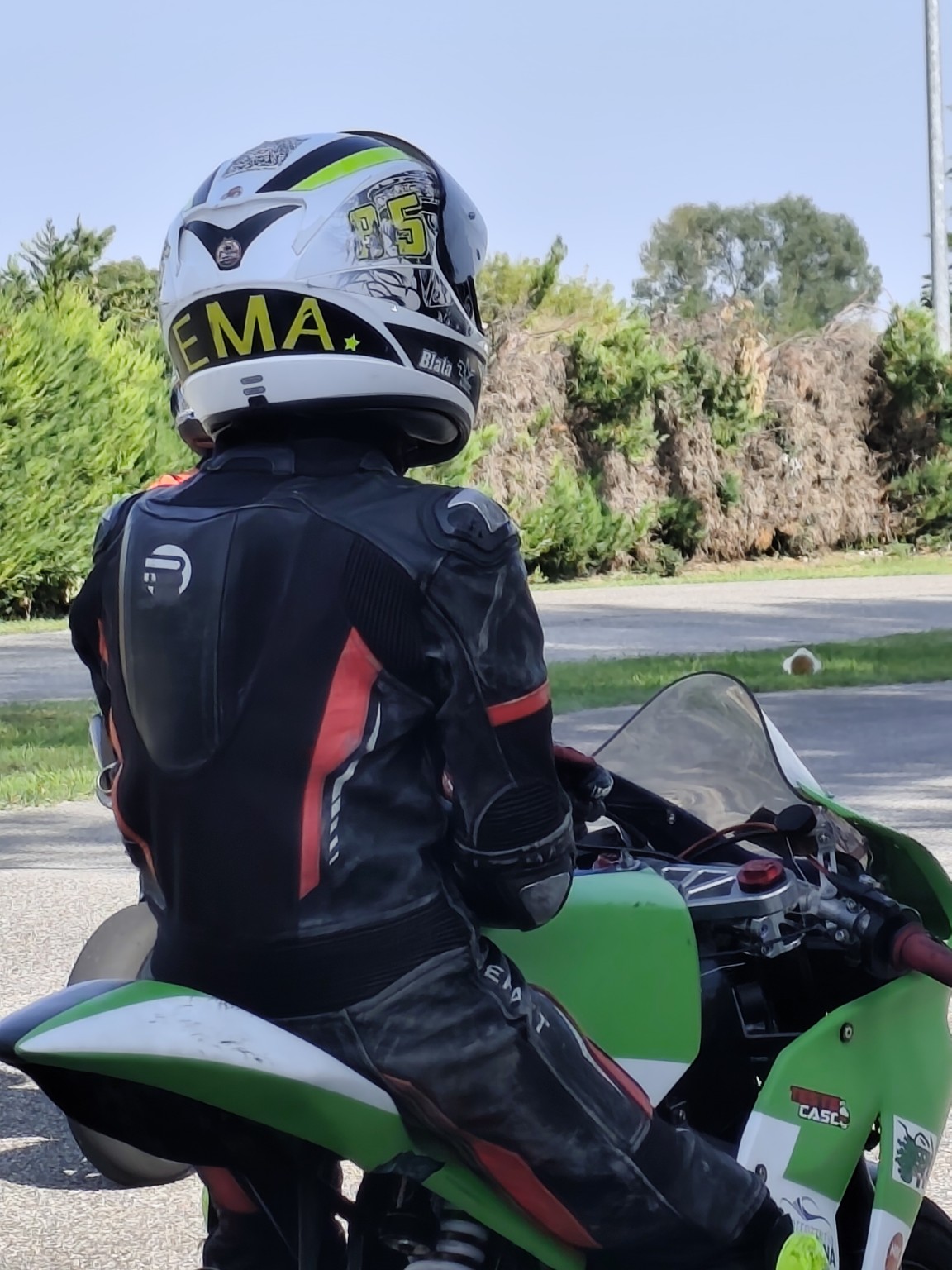
The 2027 season has not yet been written.
The 12 Pollici Italian Cup remains one of the possibilities under consideration.
The project had temporarily been put aside after technical regulations introduced shortly before registration imposed a minimum combined bike-and-rider weight that, in EMA#85's case, would have required a significant amount of ballast.
It was technically possible, but achieving it would have required structural work and extremely careful management of weight distribution.
Even with strategically positioned ballast, the team did not believe the solution could meet the safety and balance standards it sets for itself.
The decision was therefore to wait. Not to abandon the project. To wait.
An additional year also means Emanuele will approach that potential challenge with another full season of experience behind him.
At the same time, the championship just completed has shown that it could remain an excellent training and testing platform: fast riders, different circuits and potentially a calendar compatible with another racing programme.
Another possibility being evaluated would represent an even bigger change: gaining experience on an official motorcycle with an official team, moving away from a machine developed specifically around Emanuele towards a completely different technical environment.
These are possibilities, not announcements. Decisions will be made only when all the necessary conditions are in place.
The chequered flag that never came
At Ottobiano, Emanuele did not cross the finish line. In fact, he never even got the chance to start the race.
And perhaps that is precisely why the GP della Padania represents the EMA#85 season so well.
Because 2026 cannot be measured only by the races completed.
It can be measured by the move from Rookie to Talent and then to Expert. By the results achieved whenever Emanuele was able to race. By the points accumulated early enough to secure the title despite the zero-score weekends. By a motorcycle rebuilt after an accident. By problems identified, solutions tested and the ability to stop when continuing would not have been the right decision.
And it can be measured by a young rider who, once he knew he would not race, sat in the grandstand and studied the riders who may become his opponents tomorrow.
The 2026 season ends here.
Not with a chequered flag, but with eyes already fixed on the next corner.